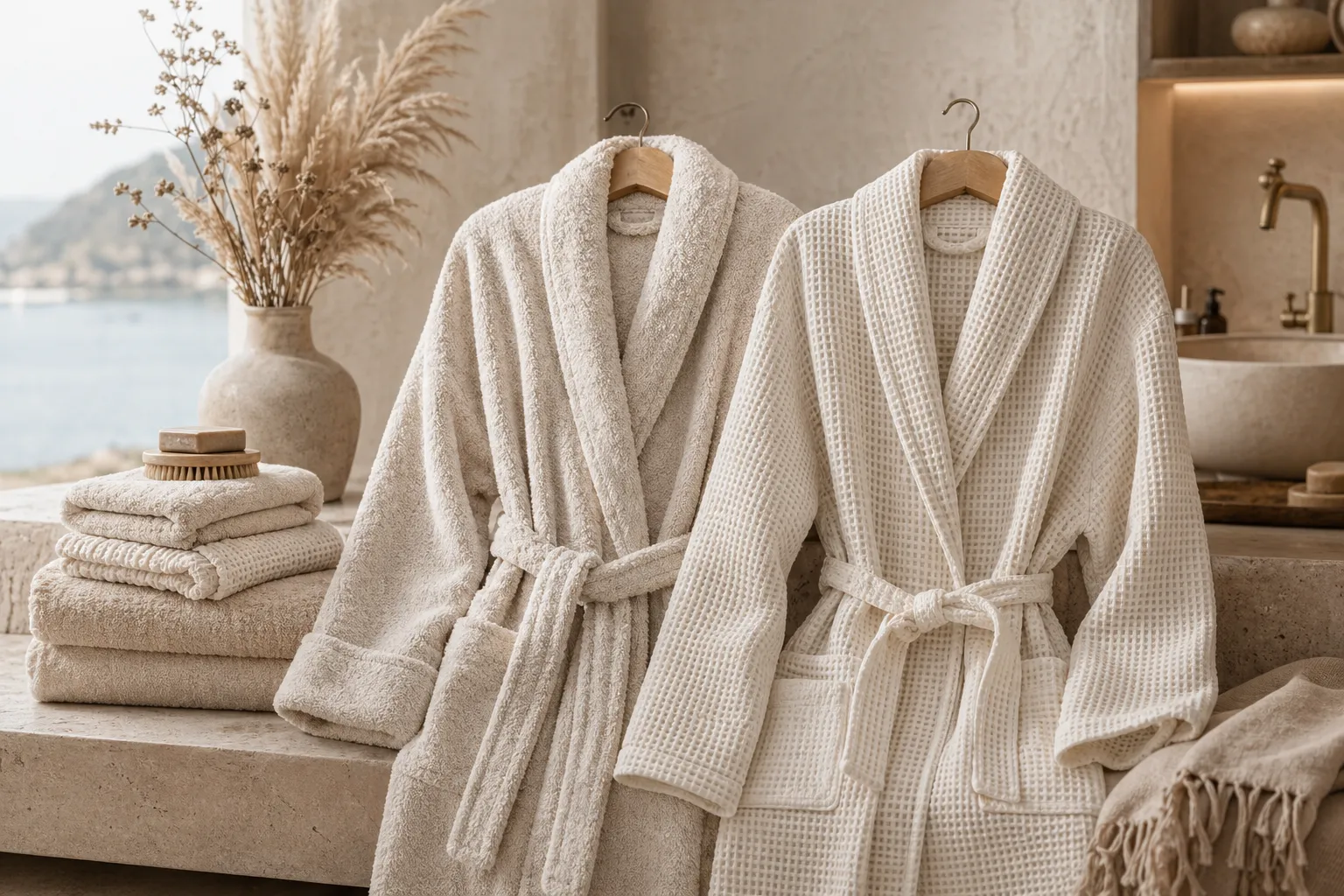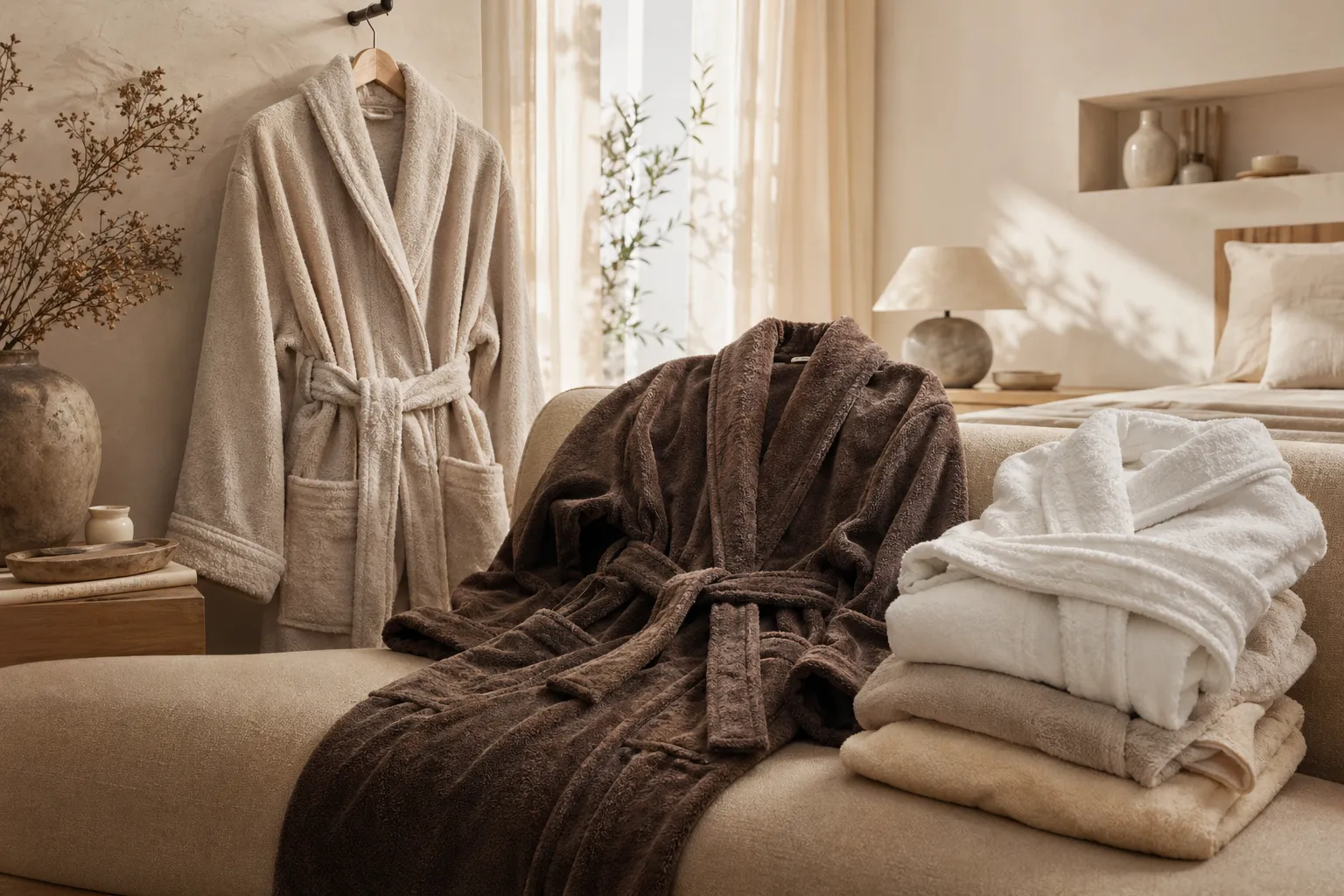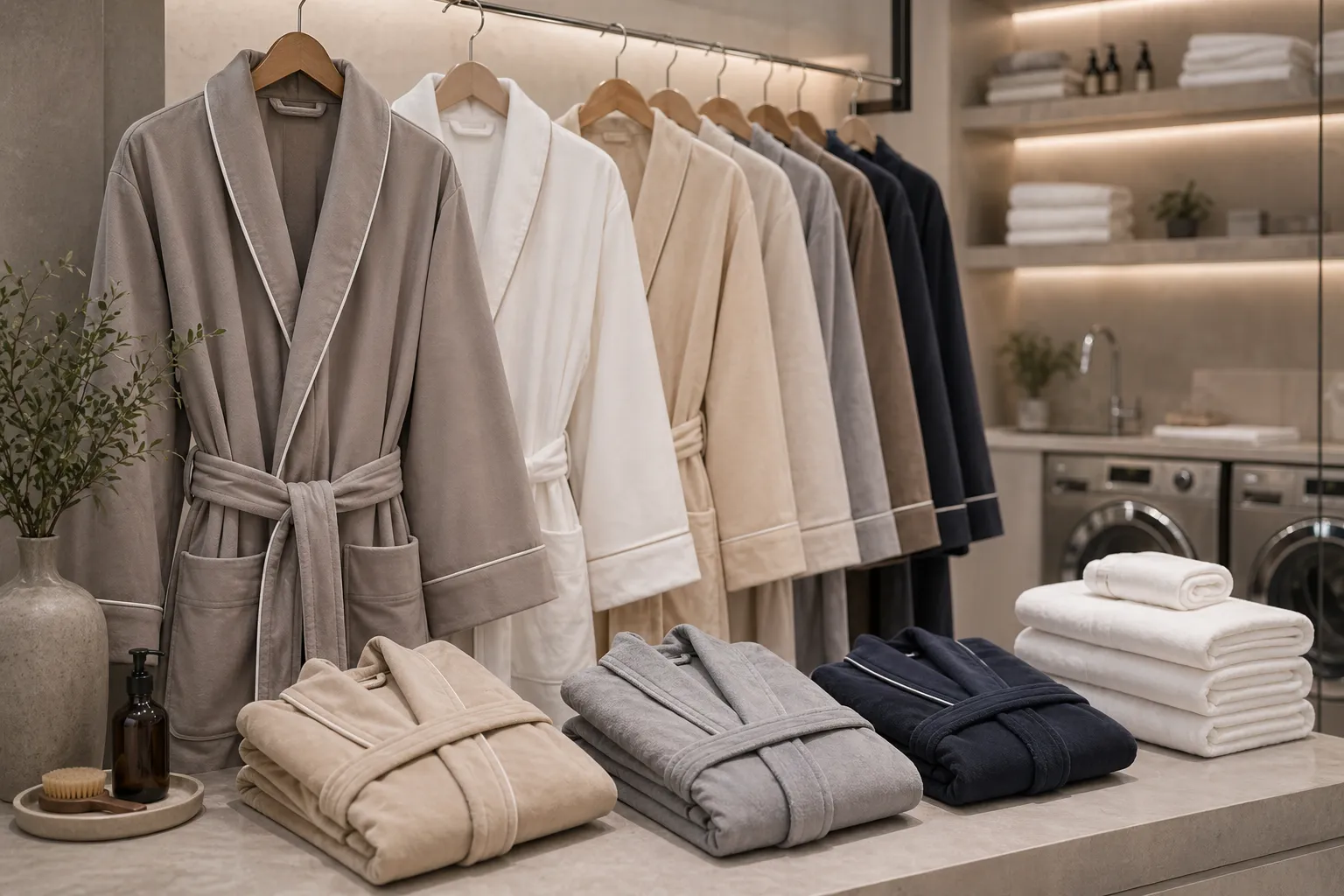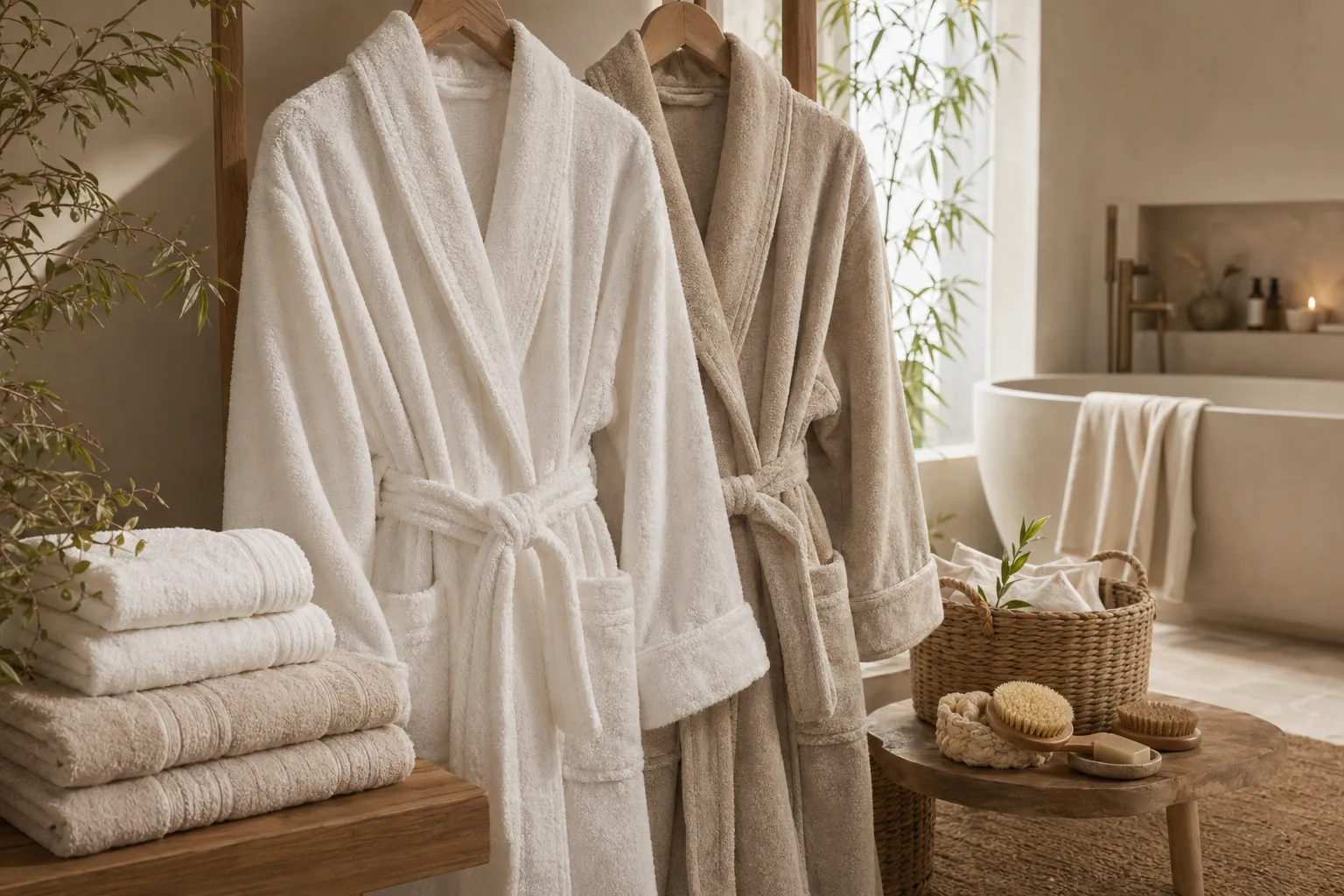
Plant fiber bathrobes are often the most familiar starting point for clients because the material story is easy to understand. Comfort feels immediate, absorbency is expected, and the product usually sits naturally in both hospitality and home-facing programs.
That does not mean every plant fiber robe solves the same problem. Cotton and bamboo can both support comfort-led bathrobe programs, but the final result still depends on construction, finish, and how the client intends the robe to be used.
Where plant fiber bathrobe decisions usually begin
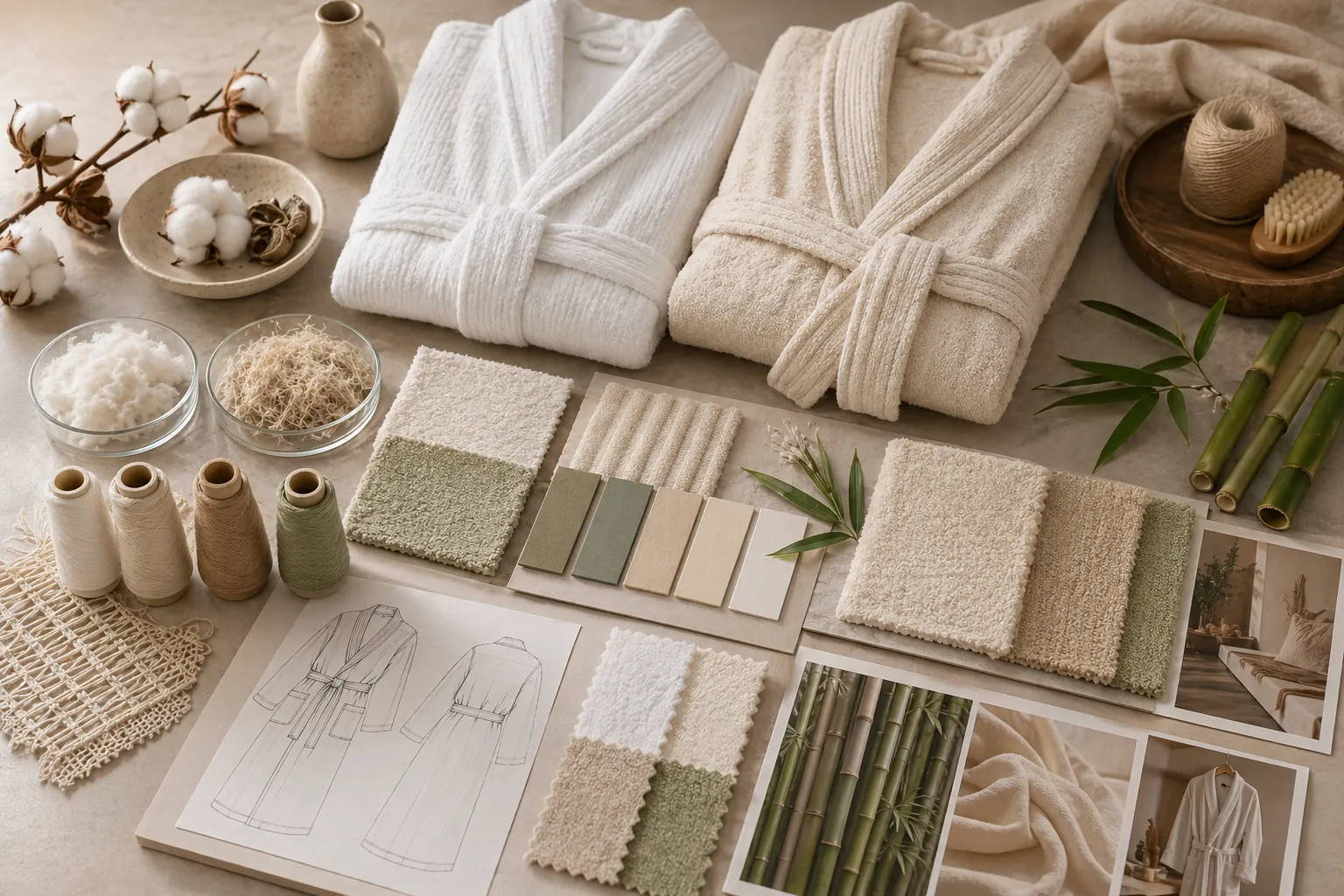
Most plant fiber projects begin with a feel requirement. The client wants the robe to feel easy against the skin, absorb moisture well, and hold a material story that feels trusted and familiar.
That is why cotton often appears first in broader bathrobe programs. Bamboo usually enters when the brief still wants softness and absorbency but with a slightly different handfeel and a more contemporary fiber narrative.
What cotton and bamboo each bring
Cotton is usually chosen because it is dependable, well understood, and easy to position across a wide range of bathrobe uses. It supports comfort and absorbency without forcing the client into a niche story.
Bamboo is often chosen when the brief wants softness with a lighter and smoother feel. It still fits comfort-led and absorbent programs, but it can bring a slightly different surface impression and product narrative.
In practical terms, plant fiber bathrobes are often valued for:
- skin-friendly comfort
- natural handfeel
- dependable absorbency
- broad commercial familiarity
- easier positioning across daily-use programs
How teams usually narrow the right direction
The best selection process usually starts with the intended wearing context rather than the fiber name alone.
If the program is built around classic comfort, wider audience familiarity, and stable repeat use, cotton often makes the strongest base. If the project wants a softer, slightly more refined feel while still staying inside a comfort-and-absorbency direction, bamboo may become the better option.
A practical review usually includes four checks:
- Define whether the program leans more classic or more refined in feel.
- Confirm the level of absorbency expected in real use.
- Test how the robe feels after finishing, not only in raw material form.
- Review whether the supply route can stay stable across repeat orders.
Where supply stability starts to matter
This is usually where material sourcing becomes more important than the label on the sample card. Plant fiber bathrobes work best when the supply chain is dependable enough to support repeat development, not only a single approval.
At Softextiles, cotton and bamboo programs are usually handled with that longer view in mind. The robe still needs to feel soft and absorbent, but it also needs a stable material route, controlled production follow-through, and a clear path into repeat supply.
That is where traditional category strength matters. Familiar materials still need disciplined execution if the client wants the bulk order to feel as reliable as the sample.
What a dedicated bathrobe factory changes
Instead of offering a wide range of unrelated products, Softextiles focuses exclusively on bathrobe manufacturing.
With a fully dedicated production system, clients benefit from:
- Category-focused expertise
- 100% bathrobe specialization
- Design and service support at no additional cost
- A structured production process for peace of mind
- Global supply across 50+ countries
- Proven performance with high repeat orders
For plant fiber programs, that focus matters because comfort and absorbency alone are not enough. The robe also needs stable sourcing and consistent repeat production if it is going to work as a real program rather than a one-time product.
Building a reliable comfort-led bathrobe program
When the material route is chosen well early on, the robe becomes easier to position, easier to approve, and easier to repeat. It feels familiar for the end user and safer for the client team managing the program.
If your team is developing cotton or bamboo bathrobes, Softextiles can help align comfort, absorbency, and supply stability so the finished robe works commercially as well as materially.