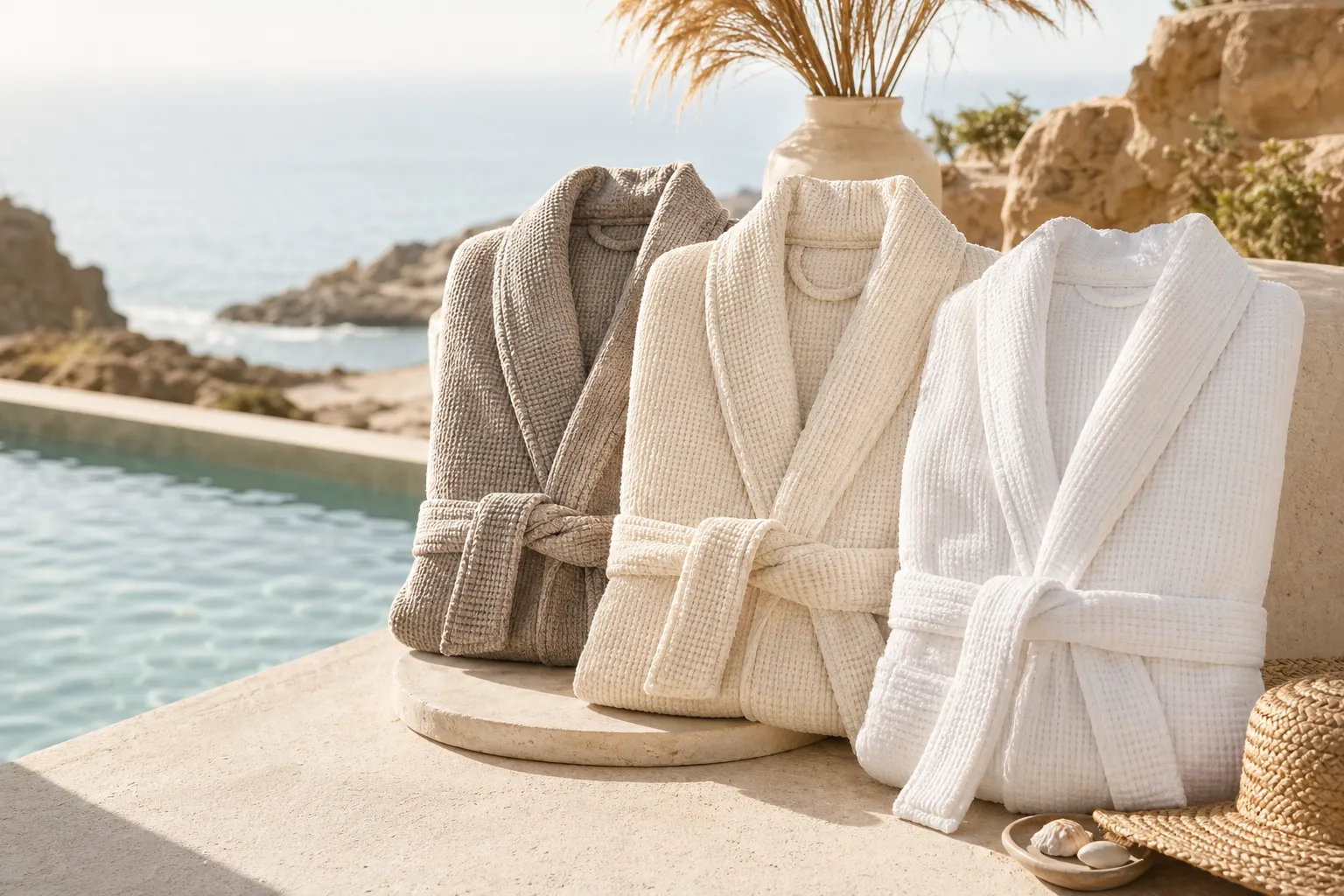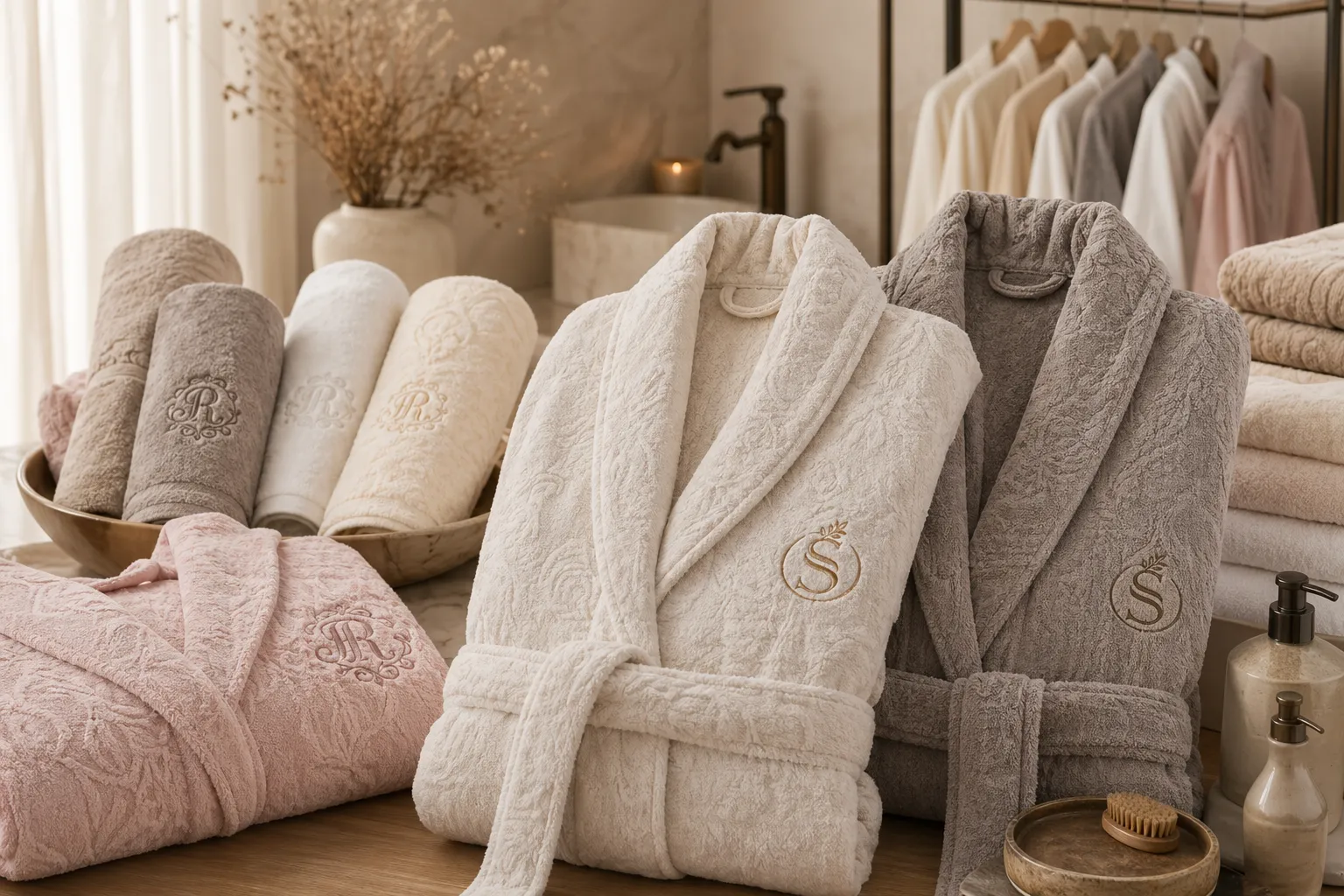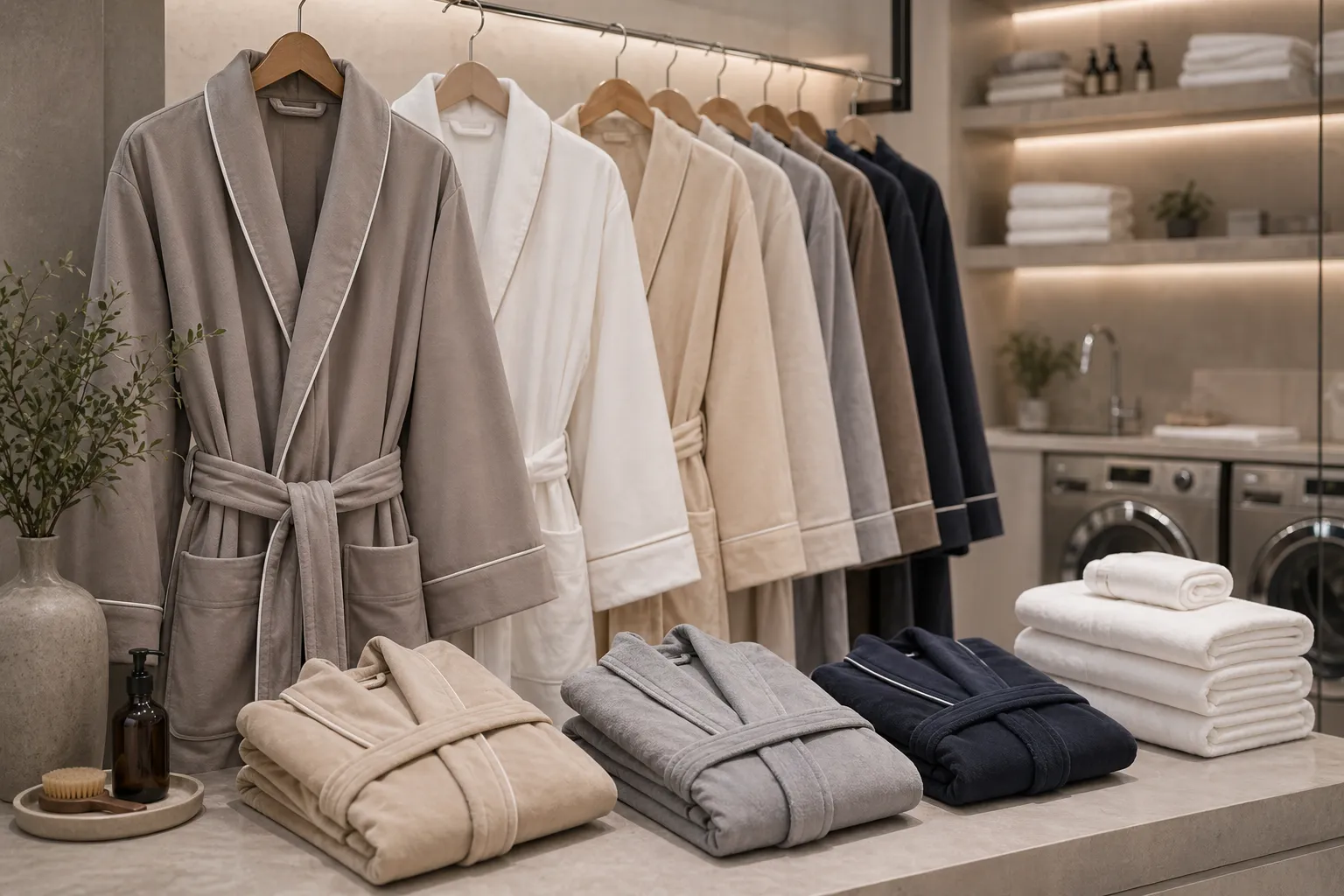
Synthetic fiber bathrobes are usually selected when performance targets are practical and clear. The client needs faster drying, stronger durability, and a product structure that supports cost control without becoming difficult to scale.
That is why these programs are often less about material romance and more about repeatable use logic. The robe still has to feel acceptable and presentable, but the bigger question is how efficiently it performs once the program moves into real volume.
Where synthetic fiber programs usually begin
Most synthetic bathrobe projects start with a utility requirement. The team wants a robe that can dry faster, handle more demanding use, or stay inside a stricter cost structure while still meeting the expected presentation level.
Polyester and microfiber usually become the main routes in this kind of brief because they allow the client to build around function, durability, and production efficiency from the start.
What synthetic fibers usually do well
Synthetic fiber bathrobes are often valued because they can support quicker drying behavior and a more controlled wear profile in repeated use. They can also help keep product planning more predictable when the program is cost-sensitive.
That does not mean all synthetic bathrobes should feel generic. The better ones are developed so the practical advantages stay visible without losing too much product appeal.
In practical terms, synthetic programs are often chosen for:
- quicker drying performance
- stronger durability in repeated use
- easier care behavior
- more controlled cost planning
- suitability for larger-volume programs
How teams usually make the final choice
The selection logic usually becomes straightforward once the intended pressure points are clear.
If the robe needs to move quickly through turnover, dry faster after use, or hold up in more practical-use settings, synthetic directions often make more sense. If the program is also sensitive to unit cost, the material route has to support that without creating instability later.
A practical review usually includes four checks:
- Define how important quick drying is in real use.
- Confirm the durability level expected across repeated handling.
- Review the cost target against the required finish level.
- Test whether the factory can scale the same quality consistently in larger runs.

Where industrial production capability matters
This is usually where manufacturing depth starts to matter more than the material name itself. A synthetic bathrobe can look straightforward on paper, but large-volume execution still depends on process control.
At Softextiles, these projects are usually handled with production stability in mind. Quick-dry and durable programs need fabric behavior, finishing, cutting, and repeat output to stay controlled if the client is building at scale.
That is where industrial-grade production capability becomes visible. The point is not only to make a practical robe. It is to make that practical robe consistently enough for ongoing supply.
What a dedicated bathrobe factory changes
Instead of offering a wide range of unrelated products, Softextiles focuses exclusively on bathrobe manufacturing.
With a fully dedicated production system, clients benefit from:
- Category-focused expertise
- 100% bathrobe specialization
- Design and service support at no additional cost
- A structured production process for peace of mind
- Global supply across 50+ countries
- Proven performance with high repeat orders
For synthetic fiber programs, that focus matters because cost control only stays meaningful when production stays disciplined. A dedicated bathrobe factory can help keep utility performance and bulk consistency aligned instead of forcing trade-offs later.
Building a practical program that still holds up
When the synthetic route is chosen properly, the robe becomes easier to budget, easier to repeat, and easier to manage in longer programs. That reduces risk for the client while keeping the product commercially useful.
If your team is developing polyester or microfiber bathrobes, Softextiles can help align quick-dry behavior, durability, and production control so the final robe works well in both performance and supply terms.