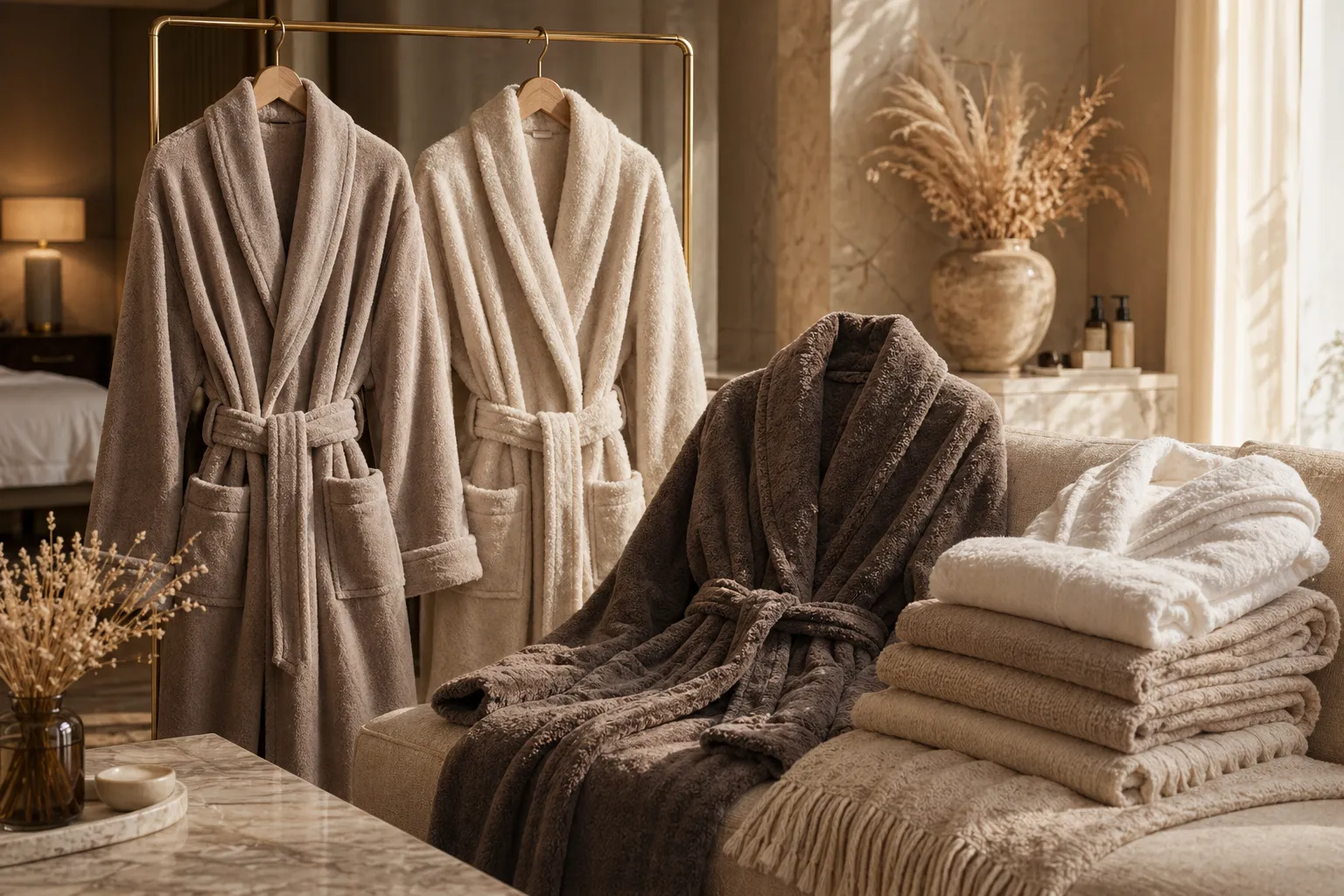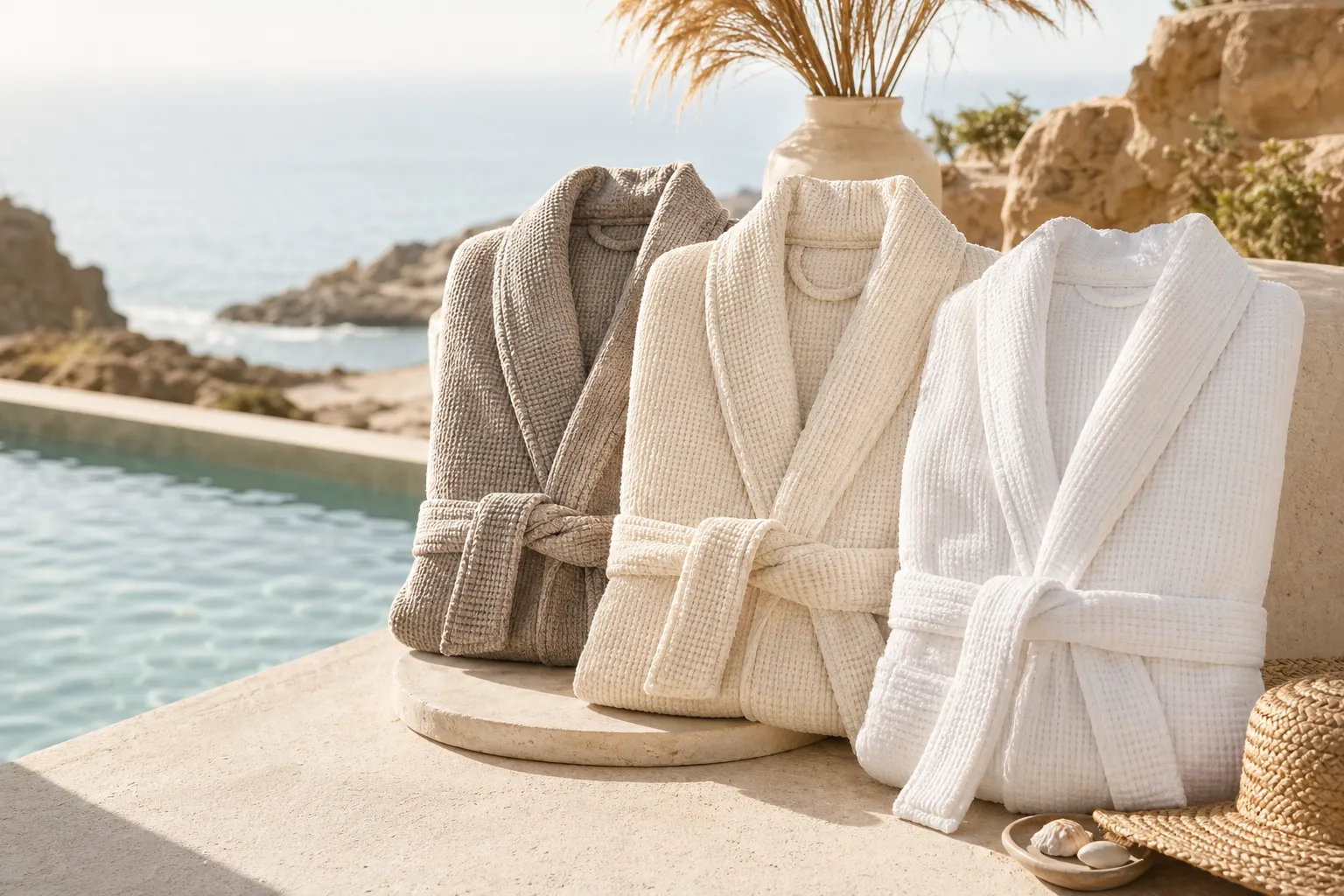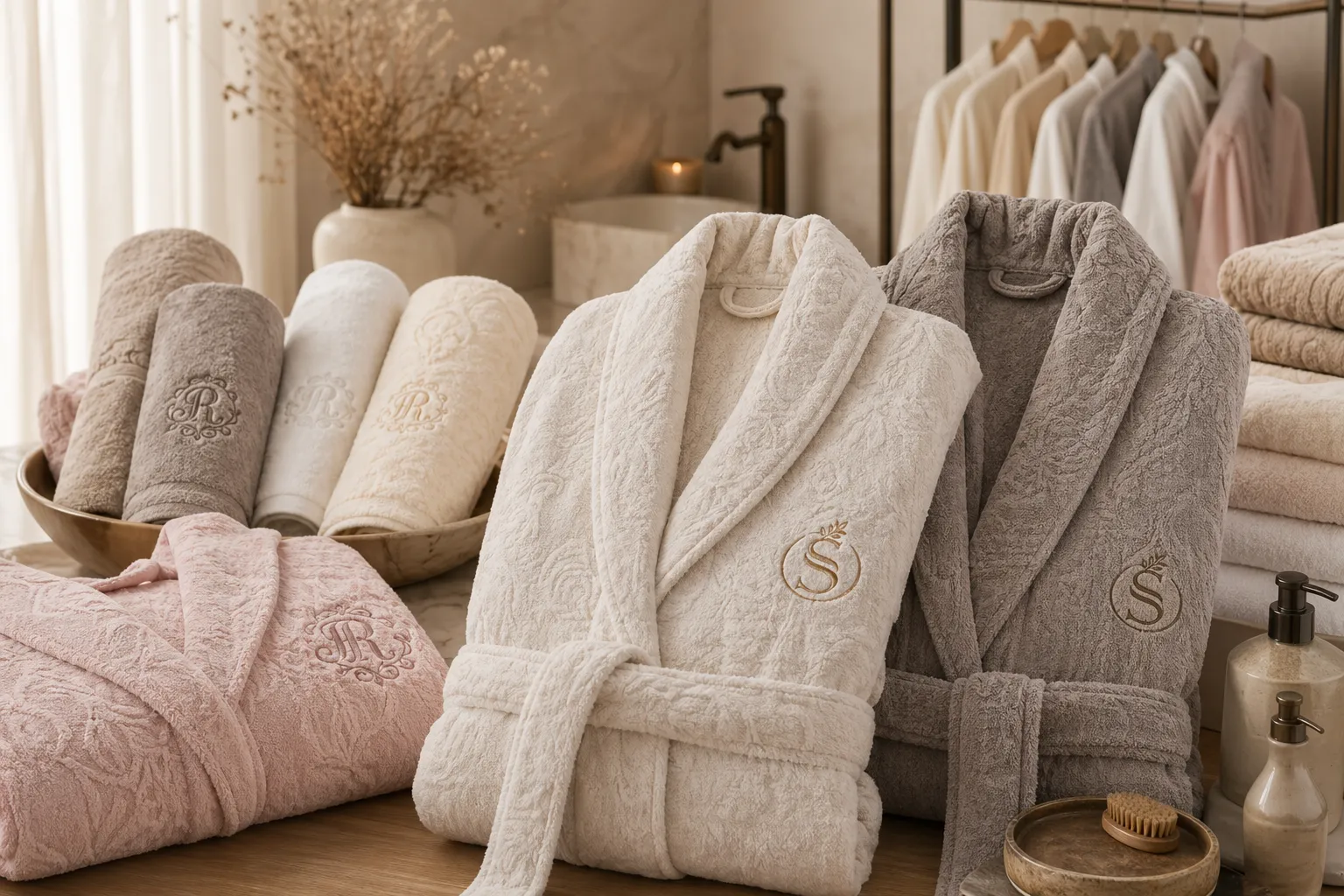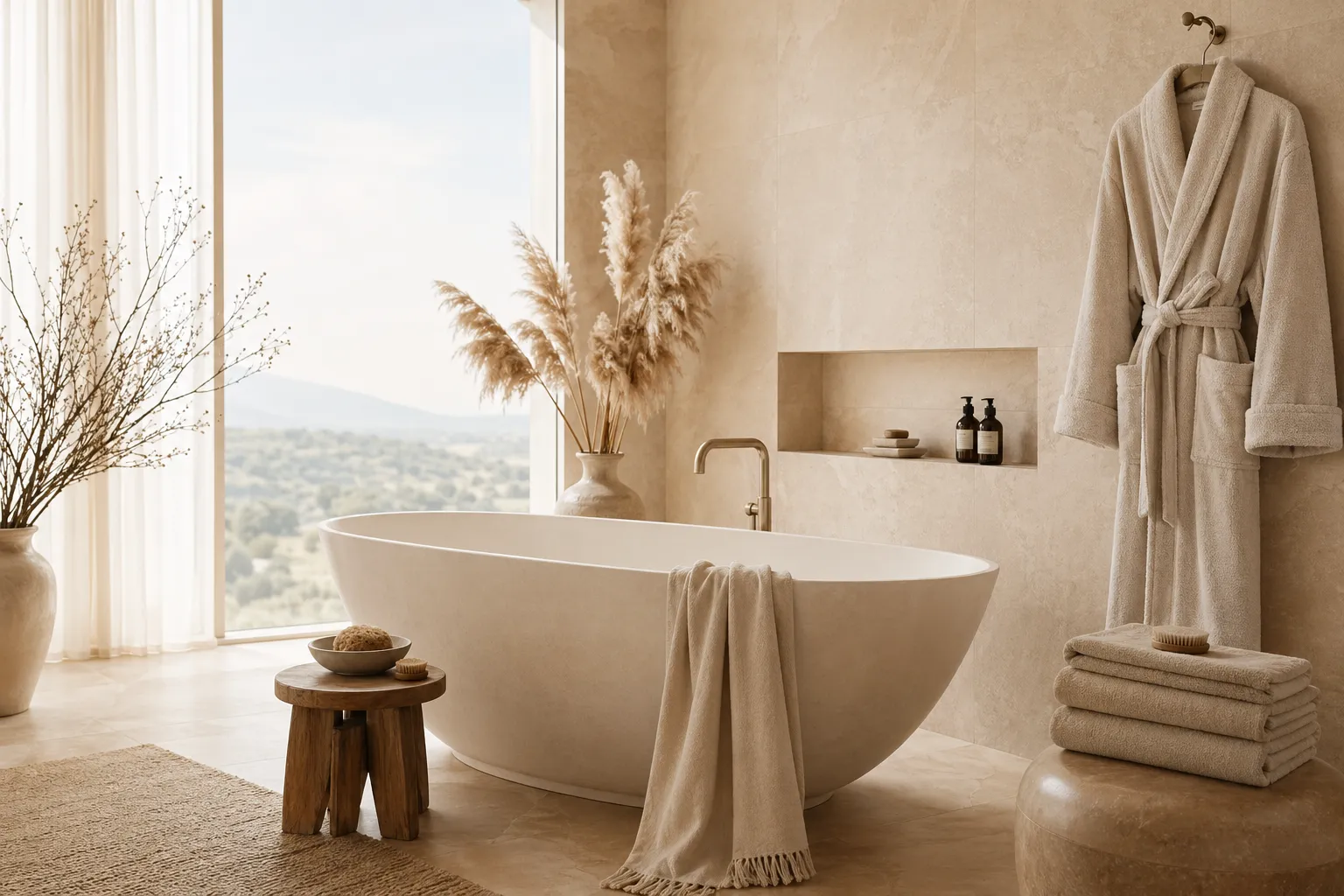
Hospitality bathrobes are rarely purchased as isolated products. In most hotel and spa programs, the robe is evaluated as part of the guest experience, the housekeeping routine, and the replacement plan behind day-to-day operations.
That is why the same robe that looks acceptable in a retail context can still be wrong for a hospitality project. The question is not only whether the robe looks good. The question is whether it fits service standards, wash expectations, and long-term supply planning.
Where hospitality robe decisions usually begin
In hospitality, robe selection often begins with a practical problem: the property needs a robe that feels appropriate for guests, holds up in repeated laundering, and remains easy to reorder without resetting the whole specification every season.
That requirement changes the conversation from style-first to program-first. Softness still matters. Visual presentation still matters. But they have to be balanced against sizing logic, towel matching, housekeeping handling, and budget consistency.
What makes a hospitality robe different
Hospitality bathrobes usually sit inside a service system rather than a merchandising system. That means the product has to work across guest touch, room presentation, linen handling, and operational turnover.
In practical terms, hospitality programs usually pay closer attention to:
- absorbency and handfeel
- wash behavior and shrinkage control
- size consistency across repeat orders
- visual calm rather than aggressive fashion direction
- replenishment continuity over time
This is also why fabric decisions are rarely only about material names. A cotton robe, a terry robe, and a waffle robe can each be correct, but only if the structure matches the intended use. Spa-facing programs may need a lighter and cleaner drape. Hotel room programs may need a fuller handfeel and a more substantial service impression.
How hospitality teams usually narrow the choice
The safest way to choose is to work backward from the operating context.
If the robe is mainly for guestrooms, the priority is often a balanced feel: comfortable enough for perceived quality, stable enough for repeated laundering, and simple enough to maintain across replenishment cycles.
If the robe is intended for spa, wellness, or resort use, the logic may shift toward lighter weight, a cleaner silhouette, quicker drying, or a softer lounge-oriented appearance.
A useful selection process usually includes four checkpoints:
- Define the application clearly.
- Confirm the weight and surface direction.
- Align branding, labeling, and packaging with the property standard.
- Test whether the robe can be reordered without changing the working specification.
This is the difference between buying a sample and building a usable hospitality robe program.
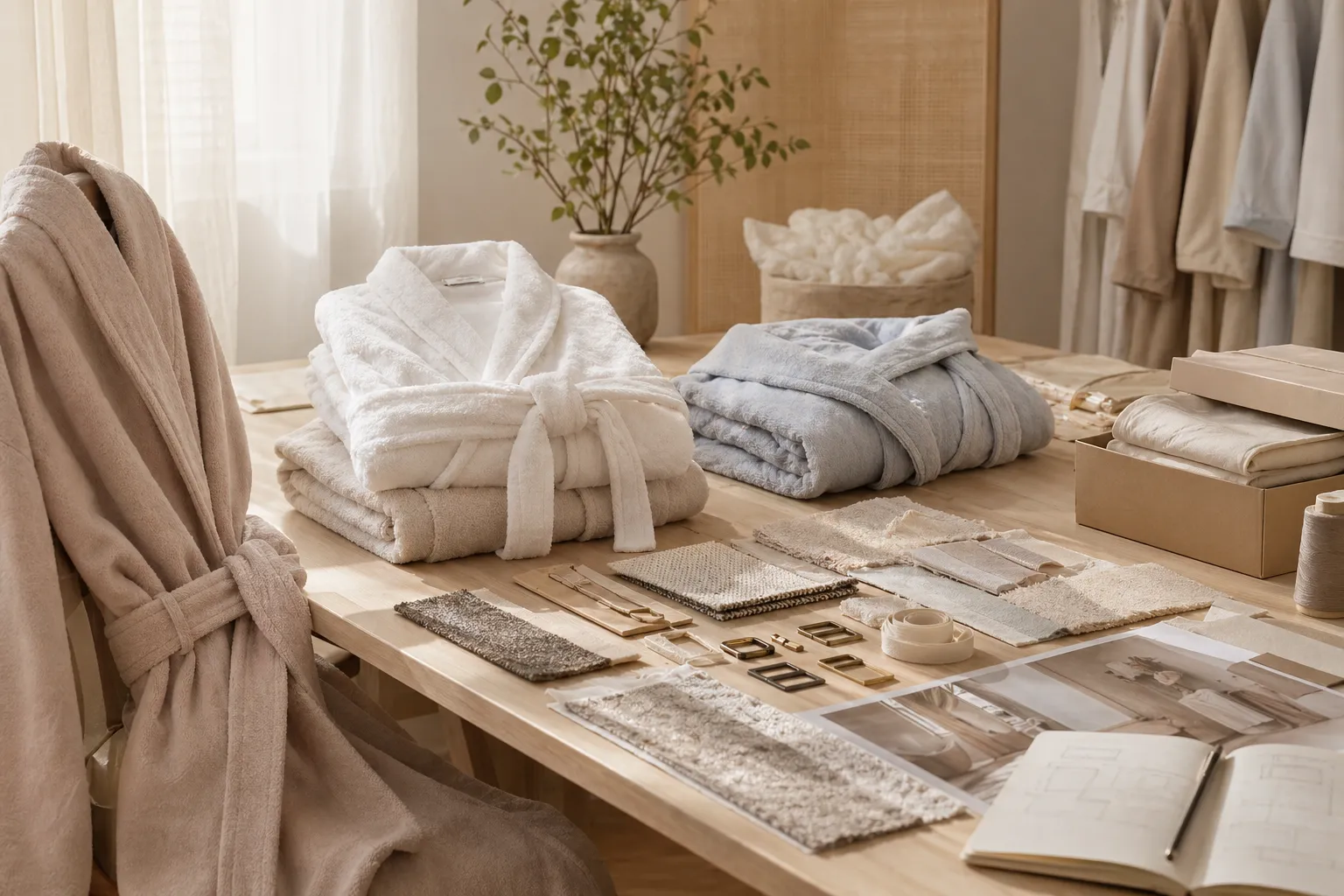
Turning a robe idea into a workable program
The work usually goes more smoothly when the supplier is treating the robe as a category program rather than as a one-off garment order.
For hotel, spa, and private-label clients, that normally starts with application fit: where the robe will be used, how it should feel in service, what level of brand visibility is appropriate, and what kind of replenishment stability the client expects after launch.
At Softextiles, that process is usually organized in layers:
- material and texture direction
- sizing and silhouette alignment
- embroidery, piping, labels, and trim decisions
- sample confirmation and revision rounds
- production follow-up and export coordination
This is where design capability and service capability become visible. A mid-to-high-end bathrobe factory should not only produce the robe correctly. It should also help the client avoid wrong turns before bulk production starts.
What a dedicated bathrobe factory changes
Instead of offering a wide range of unrelated products, Softextiles focuses exclusively on bathrobe manufacturing.
With a fully dedicated production system, clients benefit from:
- Category-focused expertise
- 100% bathrobe specialization
- Design and service support at no additional cost
- A structured production process for peace of mind
- Global supply across 50+ countries
- Proven performance with high repeat orders
For hospitality projects, that focus matters. It means the factory is not learning the category during the order. It is already working inside the logic of robe development, service presentation, and repeat supply.
From sample approval to longer-term supply
Positioning a bathrobe correctly at the beginning usually saves time later. It makes samples easier to judge, approvals easier to align, and repeat orders easier to maintain.
If your team is planning a hotel, spa, or resort bathrobe program, Softextiles can help structure the direction from fabric and feel to branding, packaging, and production follow-up, so the final result works as a real hospitality product rather than just a good-looking sample.