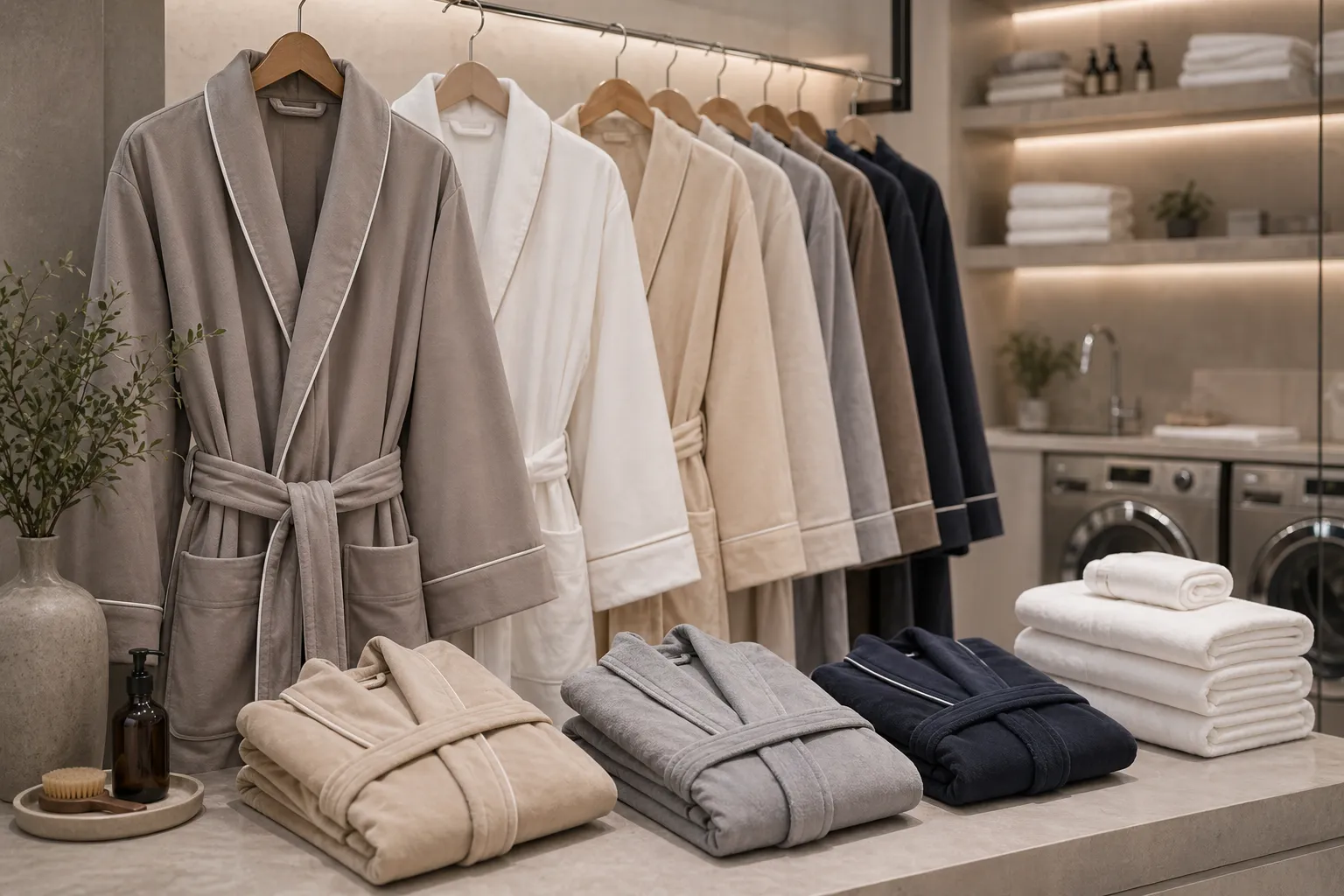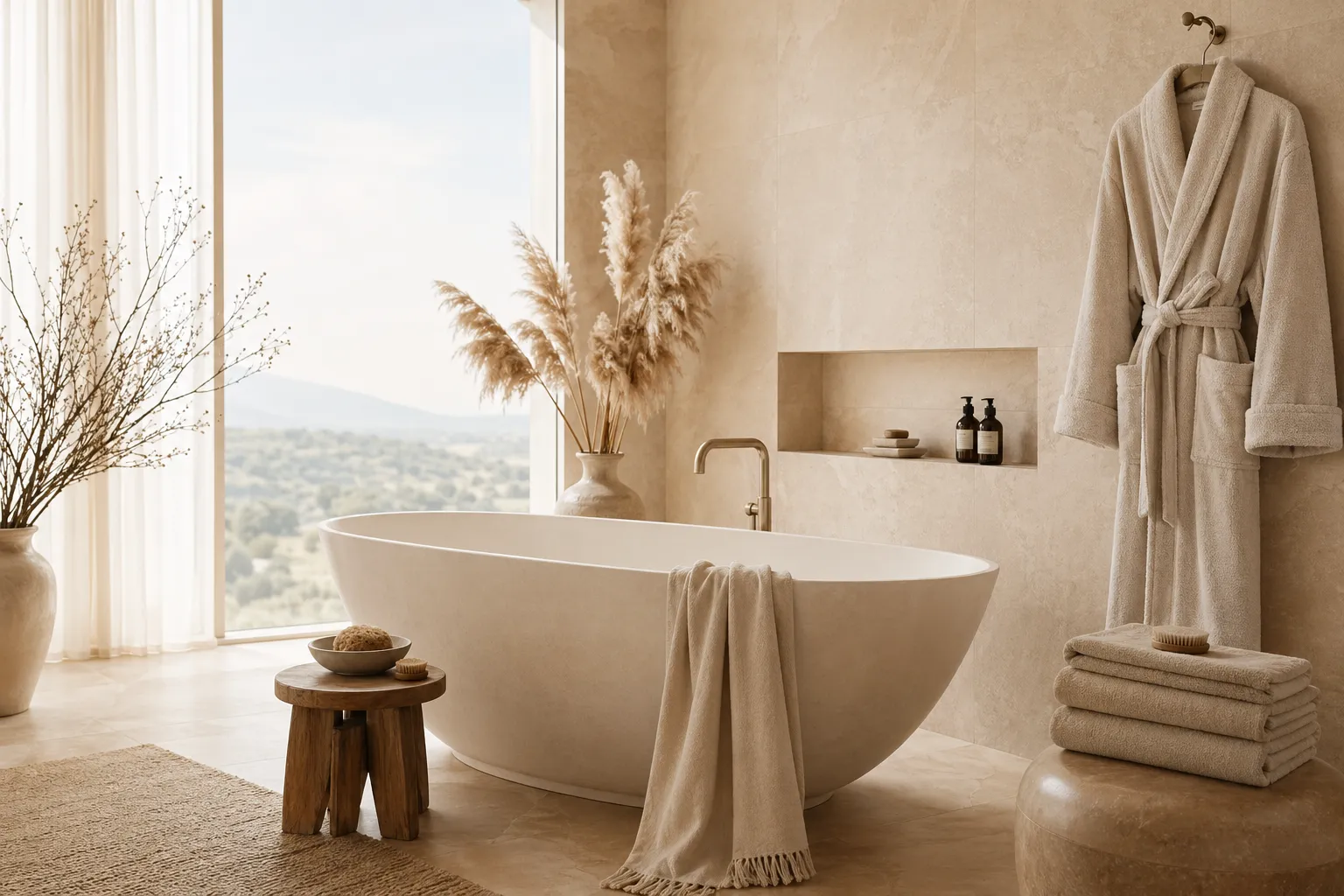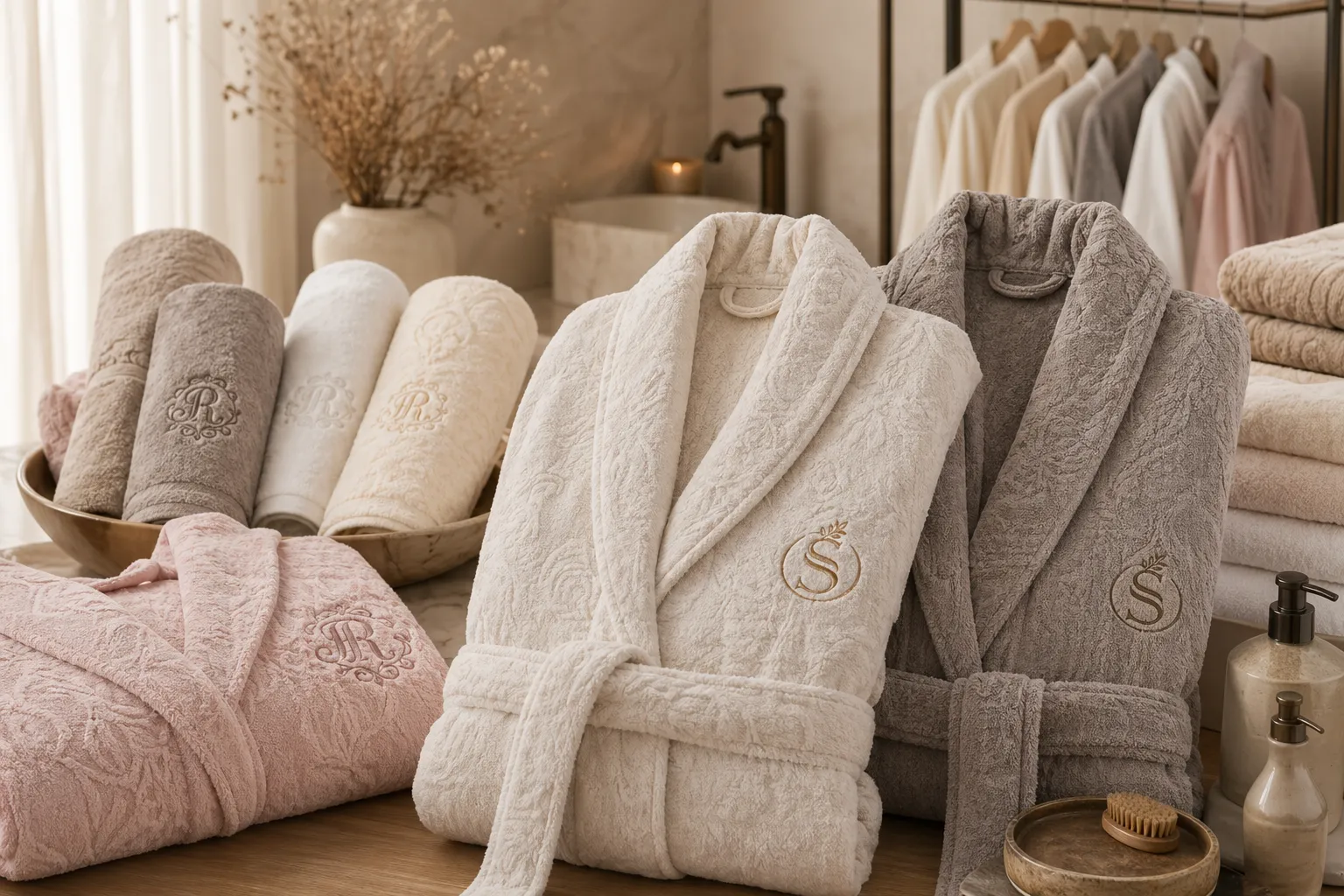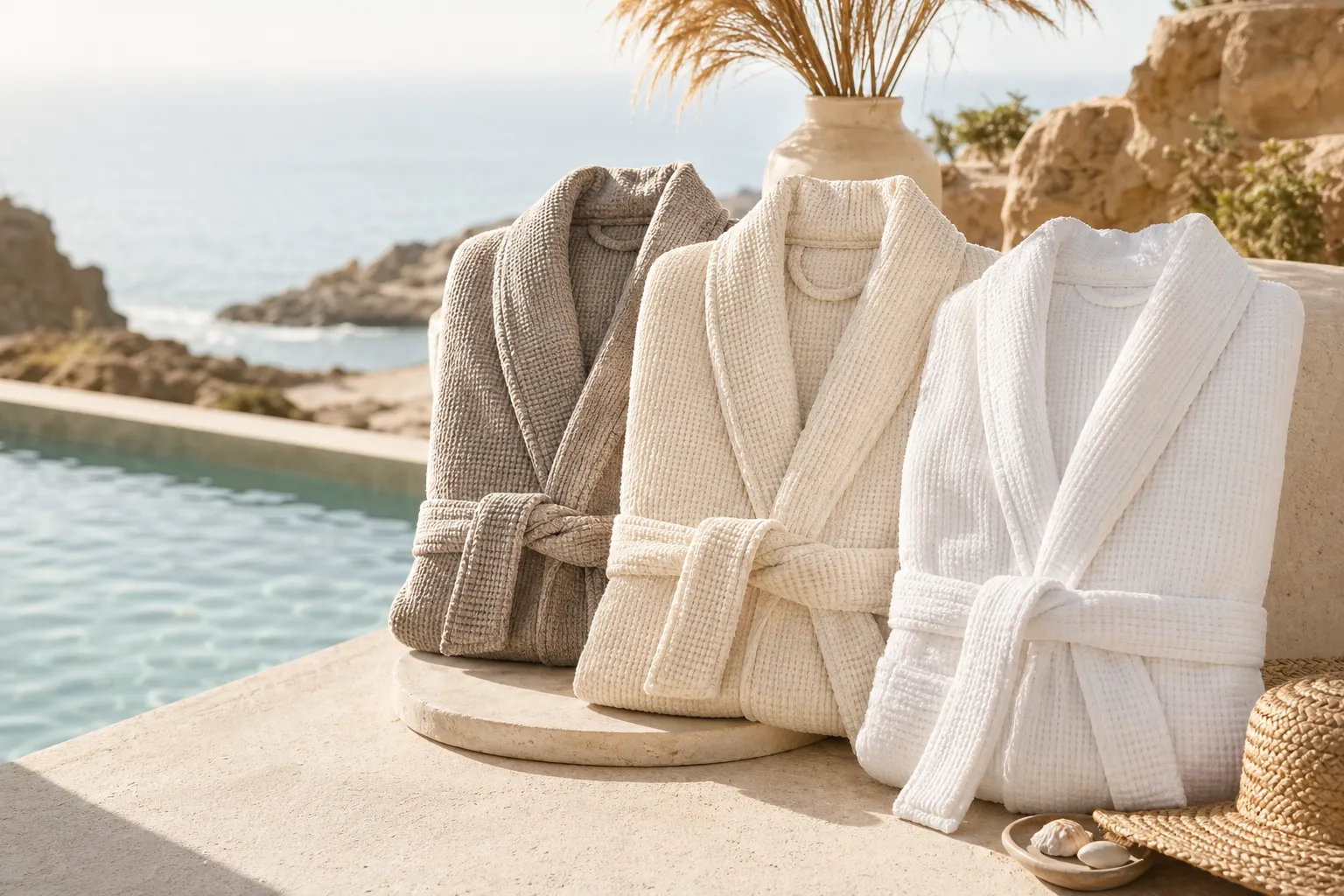
Outdoor bathrobe programs are usually judged in motion rather than at rest. A robe may look acceptable on a hanger, but once it is used beside a pool, taken through a beach club changing area, or packed for a resort stay, the real questions show up quickly.
Does it dry fast enough? Does it feel too heavy in humid weather? Does it move easily in open air and still look considered in a premium setting? Those are the points that usually decide whether a resort bathrobe works in practice.
Where outdoor robe decisions usually start
Beach and poolside projects normally begin with a use problem, not a fashion problem. The robe has to feel easy to wear after water exposure, stay comfortable in changing temperatures, and still look appropriate for the property.
That changes the starting point. Instead of building around bulk and plushness, most resort teams begin by asking for lighter weight, quicker drying, cleaner movement, and a more relaxed silhouette.
What matters more in resort and beach use
Outdoor and beach bathrobes sit between hospitality function and climate response. They are often used around moisture, airflow, sun, and temperature shifts, so the fabric structure matters more than the material label alone.
In practical terms, resort programs usually look more closely at:
- lighter overall weight
- quicker drying performance
- better breathability in warm conditions
- enough surface structure to avoid feeling flat
- easier movement in open, casual settings
That is why a quick dry robe is not only about reducing water retention. It also needs to avoid feeling clingy, stuffy, or overly dense when used outdoors.
How teams usually narrow the right direction
The safest selection process is to work backward from climate and guest routine.
If the robe is mainly for poolside circulation, teams often prefer something lighter, easier to throw on, and less absorbent than a full spa robe. If the robe is for a higher-end resort suite or beach villa, the brief may still call for softness and visual calm, but without the heavy handfeel of a colder-climate hospitality program.
A practical shortlist usually comes from four checks:
- Define whether the robe is for beach, pool, spa transition, or in-room resort use.
- Confirm whether the climate needs faster drying, better airflow, or more coverage against breeze.
- Decide how relaxed or polished the silhouette should look in the property setting.
- Test whether the fabric choice still feels right after repeated wear in warm conditions.
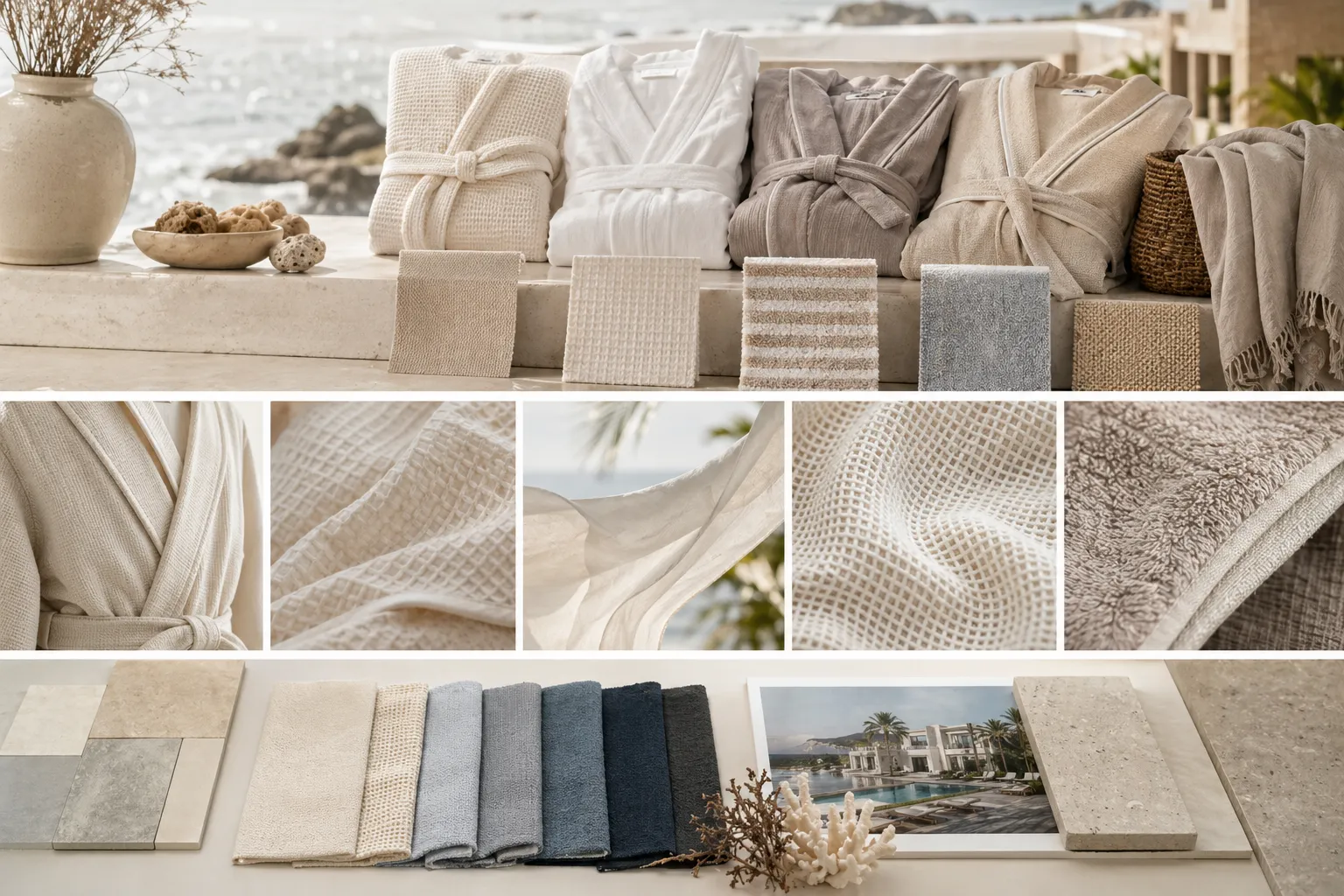
Turning resort use into the right fabric direction
This is usually where the supplier matters. Outdoor bathrobe projects rarely work well when the factory only offers standard cotton options and expects the client to adapt around them.
At Softextiles, resort and beach projects are normally developed from fabric direction first. That may mean lighter constructions, quicker-drying surfaces, blended structures, or different weave behavior depending on whether the project is headed to a tropical resort, a coastal hotel, or a milder seasonal property.
That is also where category service becomes visible. The job is not only to produce a robe after the client picks a fabric. The job is to help shape a robe that fits the setting, the climate, and the intended guest experience from the start.
What a dedicated bathrobe factory changes
Instead of offering a wide range of unrelated products, Softextiles focuses exclusively on bathrobe manufacturing.
With a fully dedicated production system, clients benefit from:
- Category-focused expertise
- 100% bathrobe specialization
- Design and service support at no additional cost
- A structured production process for peace of mind
- Global supply across 50+ countries
- Proven performance with high repeat orders
For outdoor and resort projects, that focus matters because climate fit is rarely solved by one standard robe base. A dedicated bathrobe factory can adjust development around use conditions instead of pushing every project toward the same fabric answer.
Building a resort robe program that holds up
When the early direction is correct, the final robe feels easier to approve and easier to repeat. It works better for the property, and it is less likely to create follow-up corrections after launch.
If your team is planning a resort bathrobe, beach bathrobe, or quick dry robe program, Softextiles can help align the fabric direction, climate response, and overall presentation so the finished robe works as part of a real hospitality setting rather than as a generic sample.